

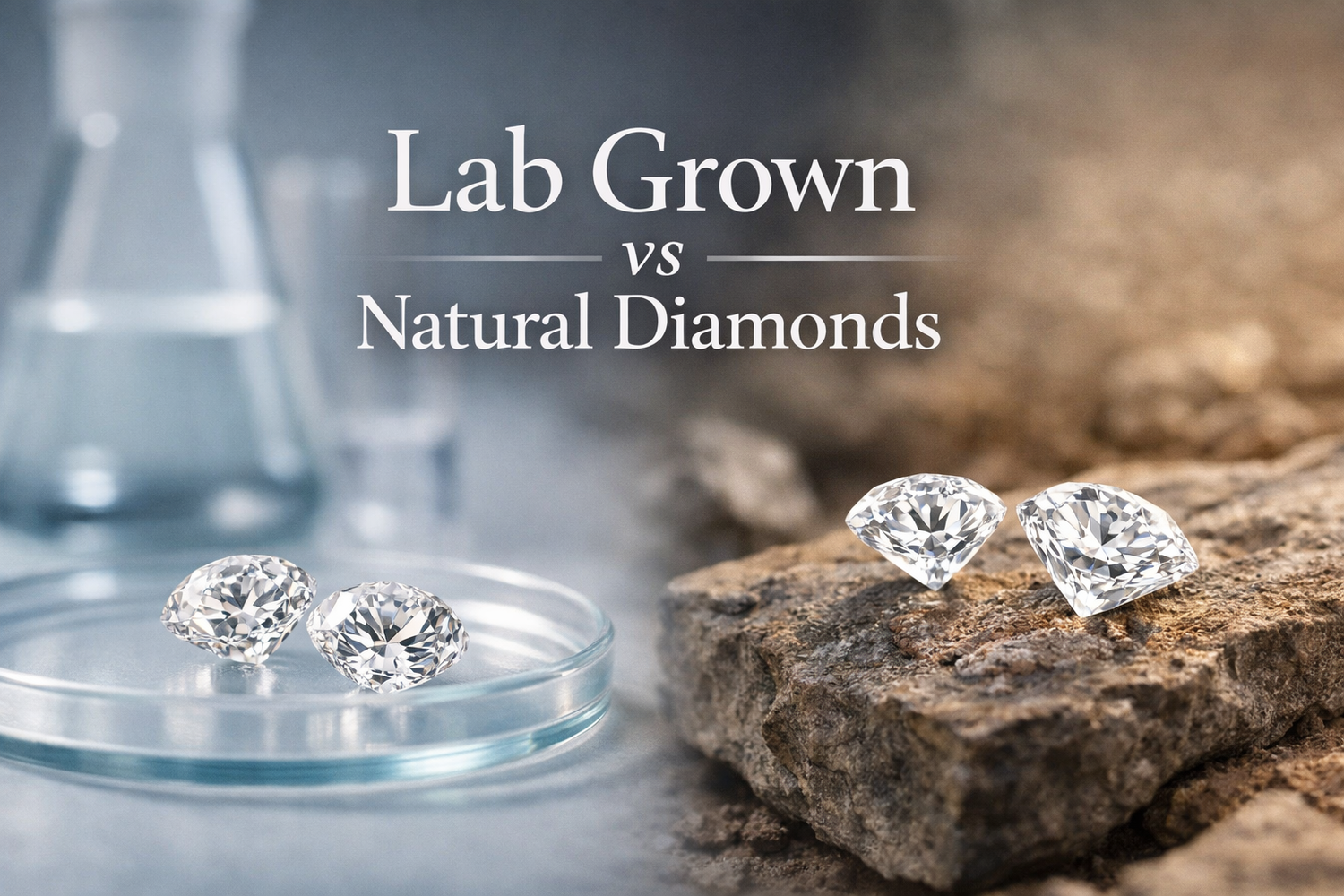
Since the earliest reports of these precious jewels, they've been appreciated for their incomparable sparkle, longevity, and the ageless style they convey. Be it through a choice of diamond for a proposal ring, an exquisite diamond ornament, or a diamond figure investment, these cut stones have always been a sign of luxury and also deeply felt sentiments. But certainly, with ongoing breakthroughs in the alteration of the jewelry manufacturing process, individuals purchasing a product nowadays come across a brand-new option: marketing natural diamond or lab-created ones. Hence, to help decide with a thorough understanding of facts concerning these two alternatives that best suit not only preferences but also budget and values, one needs to be well informed/unbiased.
What Are Natural Diamond?

Diamonds that are natural are a result of the Earth's mantle deep formation over a time period of even billions of years exposed intensely both to heat and pressure. They are first pushed right up by volcanic eruptions and later mined from the earth's surface.
Every single natural diamond differs, bearing its unique inclusions and other features that define exclusivity. Apart from that their scarcity plus resorting only to nature heavily influence their worth as well as involve glamour. The majority of people see natural diamond mostly as the symbol of genuine and traditional things, which characterize them as first-choice during high-profile moments.
What Are Lab Grown Diamonds?

Lab grown diamonds, i.e. diamonds manufactured artificially or synthetically, refer to one of the several categories of jewel that are fabricated inside special producing chambers equipped with the latest technologies. Such diamonds are obtained through procedures such as High Pressure High Temperature (HPHT) or Chemical Vapor Deposition (CVD) which accurately simulate nature's diamond production process.
Since physico-chemically and visually lab grown diamonds are indistinguishable from natural ones, almost definitely even diamonds gem testers will seek microscopic/laboratory device aids to make a properly assured determination as to type/planted/natural, etc.
Key Differences Between Lab Grown and Natural Diamond

1. Origin and Formation
The primary difference between these two types of diamonds is how they come into being. Natural diamond take billions of years to be formed deep within the Earth, whereas lab grown diamonds are made in a matter of weeks in a laboratory.
Such a contrast in sources often plays a role in shaping people's sentiments towards the purchase—some feel the natural story of a diamond is more compelling, and others like the technological aspect of lab made diamonds.
2. Price Comparison
Affordability is probably the strongest selling point for lab grown diamonds. Usually, they cost 30-50% less than natural diamond of comparable size and quality.
For instance, if you are going to buy Lab Grown Diamond Earrings , it will be possible for you to select larger stones or higher clarity grades staying within the same budget as for natural diamond pieces. Owing to this fact, lab grown diamonds strike a chord with those who intend to own fashion jewelry or want something suitable for everyday wearing.
3. Appearance and Quality
Under the microscope, lab grown and natural diamond appear to be mirror reflections of one another. In fact, they both possess the same level of brilliance, fire, and sparkle. It is worthy to mention that their quality is assessed based on the same 4Cs—cut, color, clarity, and carat weight.
Nevertheless, since lab grown diamonds are made in a tightly regulated environment, they generally contain a smaller number and size of inclusions. This factor, among others, might explain that at the same price point, one can get a lab grown diamond with better clarity.
4. Environmental Impact
More and more shoppers are factoring sustainability into their decision making process. Natural diamond extraction involves the disruption of the land and the use of a considerable amount of energy that causes environmental degradation.
Most people consider that lab grown diamonds have less impact on the environment even though it is still very energy-intensive to carry out production. Therefore it becomes a choice between natural versus lab grown diamonds when the priority is given to sustainability.
5. Rarity and Value
The natural diamond are considered a treasure because they are very rare. The constant limitation of the supply is one of the key reasons behind their long-term appreciation in value and status as a luxury item.
In contrast, lab grown diamonds can be mass-produced which results in a lower resale value. Even though they are reasonably priced at first, it is possible that their value will decrease with time unlike natural diamond.
6. Ethical Considerations
The jewellery industry has been under pressure to provide ethically sourced products. In the past, natural diamond were closely linked to areas of conflict but with the issuance of the Kimberley Process, things have become more transparent.
Choosing a lab grown diamond will ensure you avoid any concerns related to unethical mining practices so it is certainly a more ethically sound choice for the buyer who is also concerned with the morality of the goods purchased.
Understanding Diamond Types and Uses
In fact, diamonds are often not large, showy pieces. They can take many different forms, and their use in jewelry and other areas is quite diverse.
Small Stones and Accents
Melee diamonds are tiny diamonds and are primarily used as secondary stones in jewelry such as rings, bracelets, and necklaces. These small diamonds help to create an individual style of a piece and add sparkle without a significant rise in price.
Moreover, besides naturally mined diamonds, lab-created melee diamonds which represent a more affordable option for producing sophisticated and complex jewelry pieces are also offered to designers.
Industrial and Decorative Uses
Diamond Dust consists of microscopic diamond fragments used primarily for industrial purposes such as cutting, grinding, and polishing. It may also be used in jewelry for decorative purposes to give a sparkling surface finish to the design.
Although usually not viewed as gemstones, diamond dust demonstrates the multipurpose nature of diamonds beyond conventional jewelry.
The pros and cons of lab grown diamonds
Pros
- Less expensive
- Environmentally friendlier way
- Ethically produced
- Excellent clarity and quality
Cons
- Not expected to retain much of their value
- Some buyers will not appreciate the lack of rarity and emotional factor
- The investment capacity will be very limited, if at all, in the future.
The pros and cons of natural diamond
Pros
- Value and rarity combined
- Very strong appeal on an emotional and traditional level
- The value for resale and as an investment is also better
- The natural characteristics of the stones are quite fascinating
Cons
- Costlier
- Extraction also causes environmental degradation
- It is possible that the source of the diamond may not be totally ethical (though the situation is getting better).
Which one is the better choice for you?
Choosing between lab grown and natural diamond is entirely a matter of your preferences.
In case tradition, rarity, and investment that is worthwhile over time are what you are after, then natural diamond might be good for you. They are a symbol of history and uniqueness which is virtually impossible to copy.
Conversely, when you are after an affordable, environmentally friendly, and technologically advanced product, lab grown diamonds would be a smart choice. They give the buyers an opportunity to have a diamond of their dreams while lar regaining the luxury.
Buying Tips for Smart Shoppers
If you decide to buy any diamond, whether it be natural or lab grown, keep these tips in mind:
- Be sure to check the certification from reputable labs such as IGI or GIA
- Check out different stores to track prices and quality
- The cut is the most important point to get the maximum fire
- Pick a mounting that really compliments the diamond’s color and other characteristics
- Remain faithful to your budget
Understanding the basics and being equipped with the right information will ensure that you get the top-quality diamond in your price range.
Future of the Diamond Industry
The diamond industry is undergoing profound change, with lab grown diamonds increasingly becoming the first choice of younger customers. Improvements in technology still continue to make better products at lower prices, and therefore, lab grown diamonds are more attainable than ever.
In the meantime, natural diamond sustain their appeal and position due to their scarcity and emotional connection with many consumers. Lab grown diamonds do not threaten the place of naturally mined diamonds in the market; instead, they are adding to the market and giving more options to the consumers.
Each type of a diamond - lab grown and natural - presents their respective unique features and charms. Your choice will heavily depend on what issues you value the most - whether it is the aspect of tradition, budget, sustainability, or long-term value. Becoming familiar with the differences between these two alternatives will undoubtedly lead to a well-informed decision that corresponds to your lifestyle and preferences.
Related Posts :-
Astrology Benefits of Wearing Diamond Gemstone
Buying Diamonds Online vs Local Jewelers
5 Essential Tips Before Buying Loose Diamonds Online



Leave a comment
This site is protected by hCaptcha and the hCaptcha Privacy Policy and Terms of Service apply.