

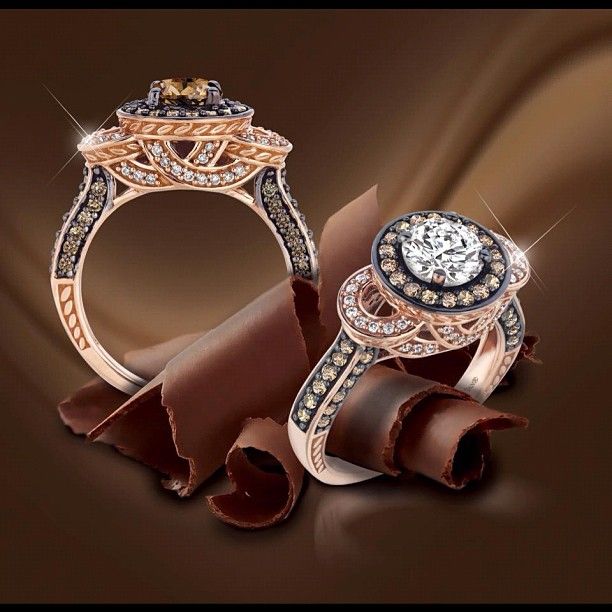

Choosing an engagement ring is not just picking a diamond and a metal. There are many different kinds of engagement rings that vary in terms of design, settings, placement of diamonds, and many other aspects. These rings can be sorted based on the general style of the ring such as solitaire, halo, three stone, or toi et moi rings. The rings can also be sorted according to the diamond setting such as prong, bezel, pavé, or channel settings. The diamond itself may influence the design of the ring depending on its characteristics such as shape or color. According to GIA, there are ring settings which hold the gemstone in place and setting styles which generally define the arrangement of stones. If you are looking for an engagement ring, you will find it useful to know the difference between them.
What Are the Different Types of Engagement Rings?
The most common engagement ring styles include:
- Solitaire engagement rings
- Halo engagement rings
- Three-stone engagement rings
- Toi et moi engagement rings
- Pavé engagement rings
- Cluster engagement rings
- Cathedral engagement rings
- Bezel-set engagement rings
- Black diamond engagement rings
- Salt-and-pepper diamond engagement rings
- Rough-cut diamond engagement rings
- Lab-grown diamond engagement rings
These categories can overlap. For example, a ring can be a black diamond solitaire with a prong setting, or a salt-and-pepper diamond three-stone ring with a bezel setting.
1. Solitaire Engagement Rings

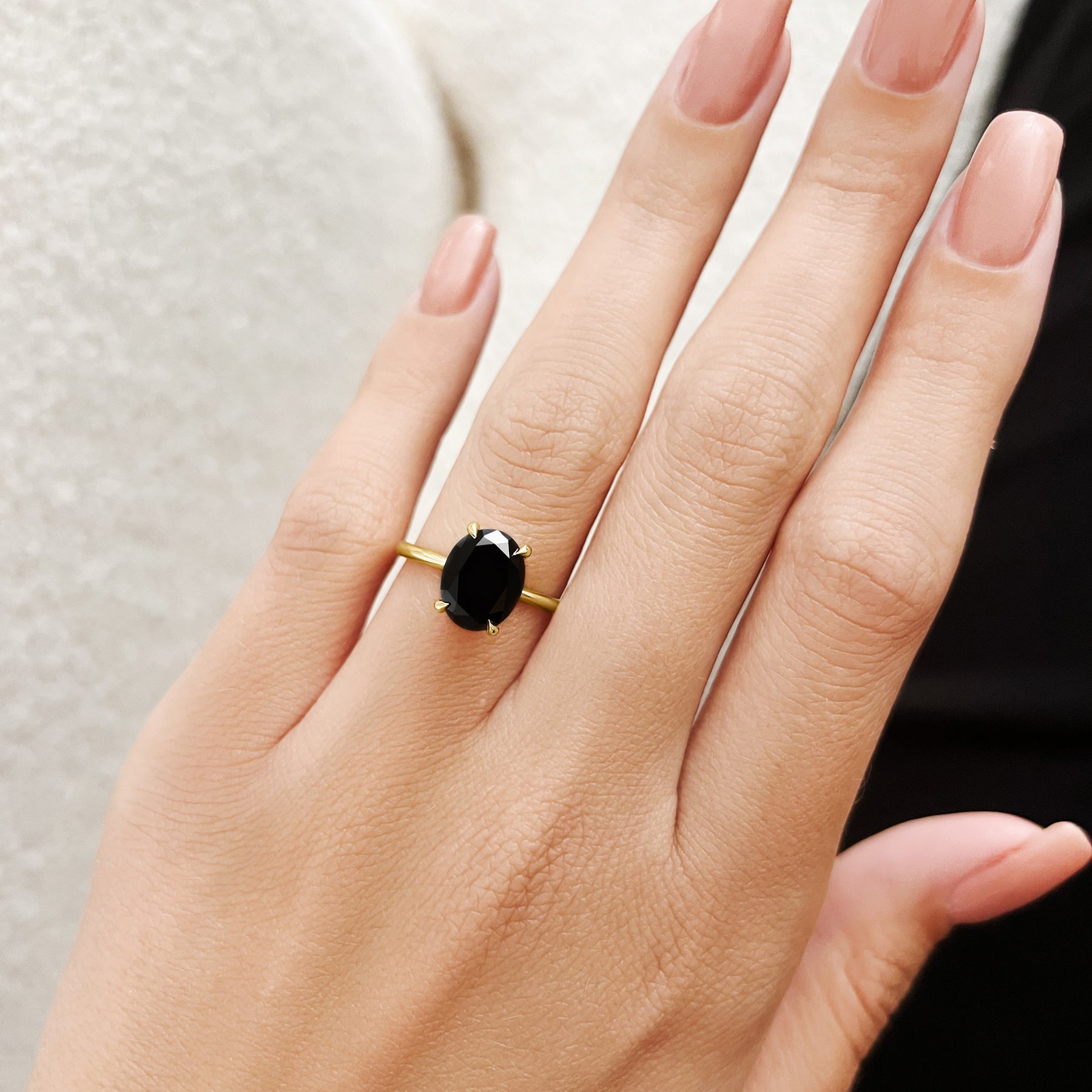
A solitaire engagement ring has one major center gemstone with minimum or no additional diamond embellishment. Since there are no other stones around to steal the show, the center stone emerges as the focal point of the ring. There are many types of settings in which a solitaire may be set; some examples include prong setting, bezel setting, cathedral setting, and many more. A solitaire ring can be a good choice when you want a minimalistic design which may go with different types of wedding rings. The center diamond itself may vary from time to time. A round brilliant solitaire will look different from an oval, pear, emerald, cushion, or black diamond solitaire. For shoppers interested in a darker and more distinctive version of this classic design, Black Diamond offers black diamond solitaire rings.
Why choose a solitaire?
A solitaire may suit you if you want:
- One main focal stone
- A simple design
- A versatile ring
- A design that works with different wedding bands
- More emphasis on the center diamond
2. Halo Engagement Rings

A halo engagement ring has a center stone surrounded by a border of smaller stones, usually diamonds. These stones act as a border to the center stone and add sparkle to it. With some design aspects, a halo can make the center stone look larger than its size. Halo rings can be made using:
- Round diamonds
- Oval diamonds
- Pear-shaped diamonds
- Cushion diamonds
- Emerald-cut diamonds
- Colored gemstones
- Black diamonds
The halo itself can also have different shapes. A round center stone may have a circular halo, while a pear-shaped center can have a halo that follows its outline.
3. Three-Stone Engagement Rings

The three stone ring has a center stone flanked by two more stones on both sides. The three stones may be:
- Three diamonds
- A diamond center with colored gemstones
- Different diamond shapes
- Matching stones
- Contrasting stones
The side stones can increase the width of the ring and make the ring have more design elements around the center diamond. Three stone rings are also known to symbolize past, present, and future. GIA recognizes the three-stone ring as one of the established engagement ring designs.
4. Toi et Moi Engagement Rings

A toi et moi engagement ring features two gemstones positioned side by side. The name means "you and me" in French. The two stones can match or differ in shape, size, or color. For example, a toi et moi ring might combine:
- Pear and emerald-cut diamonds
- Two round diamonds
- A diamond and sapphire
- Two contrasting diamond colors
This style is useful for someone who wants an engagement ring that looks different from a traditional single-stone design.
5. Pavé Engagement Rings

In the pavé engagement ring setting, small diamonds are closely set together in one section of the ring, usually the band or around the center stone. The small stones provide a constant sparkle while letting the center stone be the center of attention. There are many different styles of engagement rings that can use pavé, such as:
- Solitaire
- Halo
- Three-stone
- Cathedral
- Vintage-inspired designs
Because pavé rings contain multiple small stones, the setting should be checked periodically to make sure the stones remain secure.
6. Cluster Engagement Rings

A cluster engagement ring groups several smaller gemstones together to create one larger visual arrangement. The stones can form:
- Floral patterns
- Geometric designs
- Circular arrangements
- Vintage-inspired shapes
- Irregular artistic patterns
The cluster design provides for a larger visual impact without necessarily having a single large center diamond. This kind of design can incorporate different diamond shapes and colors, offering the designer greater flexibility in the design.
7. Cathedral Engagement Rings

Cathedral rings feature metal arches that rise up from the shank towards the central diamond. This design elevates the central stone and creates a more structured profile. Cathedral rings can be combined with:
- Solitaire diamonds
- Halo designs
- Three-stone rings
- Pavé bands
- Different diamond shapes
The raised central position will enhance the visibility of the diamond; however, the increased height might increase the probability of snagging the ring on something. GIA suggests taking your lifestyle into account before deciding on which setting you choose.
8. Bezel-Set Engagement Rings

The bezel setting is a metal band that encircles the edge of the gemstone. In contrast to the open prong setting, the metal offers more protection on the edge of the stone. According to GIA, bezel settings provide good protection for the edges of the gemstone and a clean, modern look. A bezel setting may be a good option for someone who:
- Prefers a low-profile appearance
- Wants additional edge protection
- Has an active lifestyle
- Likes modern or minimalist jewelry
The trade-off is that more of the stone's edge is covered by metal compared with an open prong setting.
9. Prong-Set Engagement Rings

A prong setting is one that uses small metal fingers to hold the central diamond in place from the edges. The four-prong and six-prong setting styles are widely used. In prong settings, most of the diamond is left open, which allows light to be directed towards the diamond from all sides. According to GIA, the number of prongs may also influence the appearance of a round diamond.
Four-prong vs six-prong
The four prong design gives the illusion that more of the diamond will show through the setting, while adding an angular aspect to a round shape. The six prong design adds even more protection to the diamond, as well as giving added emphasis to its round appearance. Both options depend on your personal preferences.
10. Black Diamond Engagement Rings

A black diamond engagement ring uses a black diamond as the center or accent stone. Black diamonds can create a very different appearance from the traditional colorless diamond engagement ring. They can be paired with:
- White gold
- Yellow gold
- Rose gold
- Platinum
- Black metal finishes
- Colorless diamond accents
A black diamond can also be used in different ring styles. For example, you can combine a black diamond with a solitaire, halo, three-stone, or modern geometric design. If you are specifically looking for this style, explore Black Diamond's black diamond rings.
Black diamond solitaire rings
A black diamond does not have to be surrounded by numerous accent stones. A simple center-stone design can put the color and shape of the black diamond at the center of attention. Black Diamond's black diamond solitaire ring collection is relevant for shoppers looking for this combination.
11. Salt-and-Pepper Diamond Engagement Rings

Inclusions inside the salt-and-pepper diamond can result in black, gray, white, and even mixed patterns inside the diamond. Unlike the traditional diamond picked up because of its very clean look, the salt-and-pepper diamond uses its nature-created features in the design. This makes each diamond unique. They can be used in:
- Solitaire rings
- Bezel settings
- Three-stone rings
- Halo rings
- Vintage designs
- Modern minimalist rings
A pear-shaped salt-and-pepper diamond can be particularly distinctive because the elongated shape combines with the stone's internal pattern. Black Diamond's salt-and-pepper diamond engagement ring collection is a relevant option for shoppers exploring this style.
12. Rough-Cut Diamond Engagement Rings

A rough-cut diamond engagement ring makes use of a diamond that is less traditionally styled. Rather than concentrate exclusively on the very symmetrical image normally associated with traditionally cut diamonds, rough-cut diamonds make use of the diamond's irregular form and natural style. This type of diamond may appeal to individuals interested in:
- Organic-looking jewelry
- Less conventional diamond designs
- Rustic or artistic aesthetics
- One-of-a-kind visual details
Because rough and raw-looking diamonds can vary significantly in shape and appearance, the ring design is often built around the individual stone. If this style matches what you are looking for, Black Diamond offers rough-cut diamond rings online in the USA.
13. Rose Gold Lab-Grown Diamond Engagement Rings

Different metals affect the general look of the engagement ring despite having the same diamond. The pink color of rose gold comes from the metal alloy that gives it this shade. In combination with the lab-grown diamond, the rose gold creates a blend of modern diamonds and warm metal. The design of the rose gold lab-grown diamond ring can be as follows:
- Solitaire
- Halo
- Three-stone
- Pavé
- Vintage-inspired
- Minimalist
If you're specifically considering this combination, you can explore Black Diamond's rose gold lab-grown diamond rings.
Diamond Shape Is Another Important Choice
The ring style is only one part of the decision. The shape of the diamond also affects how the finished engagement ring looks. Popular diamond shapes include:
- Round
- Oval
- Pear
- Emerald
- Cushion
- Princess
- Marquise
- Radiant
- Asscher
- Heart
GIA states that diamond cut may affect the perception of size, appearance, and the kind of setting for that diamond. For instance, elongated cuts like oval, pear, and marquise may create a different visual impression from a round diamond of the same carat weight. Pointed cuts may also require particular protection in the setting.
What Is the Difference Between an Engagement Ring Style and a Setting?
This is a common source of confusion.
Engagement ring style
The style describes the overall arrangement or design of the ring. Examples include:
- Solitaire
- Halo
- Three-stone
- Toi et moi
- Cluster
Ring setting
The setting describes how the gemstone is held. Examples include:
- Prong
- Bezel
- Channel
- Pavé
- Tension
- Flush
- Basket
One ring can have both a style and a setting. For example: Round diamond + solitaire style + six-prong setting + platinum band or: Salt-and-pepper diamond + three-stone style + bezel setting + yellow gold band Understanding these terms makes it much easier to communicate with a jeweler and compare different designs. GIA makes the same distinction between settings and setting styles.
How Do You Choose the Right Type of Engagement Ring?
There is no single engagement-ring style that works for everyone. Start with how the ring will be worn and what type of design you prefer.
Consider your daily lifestyle
For those who deal with their hands often, a less protruding or more protected mounting is more feasible. Elevated settings are suitable for creating emphasis around the center stone, although they might be prone to bumps and snagging on clothes.
Consider the diamond
Think about:
- Shape
- Carat weight
- Color
- Clarity
- Cut
- Natural or laboratory-grown origin
- Diamond color, if choosing a black or other fancy-color stone
Consider the metal
Common choices include:
- Yellow gold
- White gold
- Rose gold
- Platinum
The metal affects the overall color and appearance of the ring.
Consider maintenance
A ring with many small stones may require more attention than a simple solitaire. Prongs should also be checked periodically because they are responsible for securing the center stone.
Consider your budget
Instead of deciding only on a carat size, consider the complete ring: diamond + setting + metal + accent stones + craftsmanship + documentation This gives you a more realistic idea of what you are comparing.
Which Engagement Ring Style Is Right for You?
The answer depends on the features you value.
| Engagement ring type | Main characteristic | Often suits |
|---|---|---|
| Solitaire | One center stone | Minimal, classic designs |
| Halo | Center stone surrounded by accents | Extra sparkle |
| Three-stone | Center plus two side stones | Multi-stone designs |
| Toi et moi | Two main stones | Distinctive romantic styles |
| Pavé | Small stones set closely on the band | Added sparkle |
| Cluster | Multiple stones grouped together | Decorative designs |
| Cathedral | Raised arches support the center | Elevated center-stone look |
| Bezel | Metal surrounds the stone's edge | Protection and low profile |
| Black diamond | Dark center or accent stone | Bold, alternative styles |
| Salt-and-pepper | Visible internal inclusions | Individual, organic appearance |
| Rough-cut | Less traditional stone appearance | Natural or artistic designs |
| Lab-grown diamond | Laboratory-grown diamond | Buyers considering lab-grown options |
This table is a starting point rather than a ranking. The right design depends on your preferred appearance, diamond, lifestyle, and budget.
Frequently Asked Questions About Types of Engagement Rings
What are the most popular types of engagement rings?
Solitaire, halo, three-stone, toi et moi, pave, cluster, and cathedral are some of the most popular styles of engagement rings. The rings can also be classified according to the way they are set with the gemstone, such as prong or bezel setting.
What is the most classic type of engagement ring?
One of the most classic engagement ring styles is solitaire. In this type of engagement ring, the center gemstone is placed as the focal point of the ring. Solitaire rings can be set in different ways with diamonds of different shapes.
What is a solitaire engagement ring?
In a solitaire engagement ring, there is one main center gemstone and few or no other stones in the ring. The simple structure allows focusing on the center diamond.
What is a halo engagement ring?
In a halo engagement ring, the center stone is surrounded by smaller diamonds or other gemstones.
Three-stone engagement rings - definition
The three-stone engagement ring contains the center stone surrounded by two other stones on both sides. These stones can be diamonds or a mixture of diamonds and other gemstones.
Should I use black diamonds in engagement rings?
Black diamonds can be used in engagement rings, serving as an alternative to white diamonds in terms of color. They can be mixed with various metals and accent stones.
Final Thoughts
Many types of engagement rings exist, but deciding which one is easy when the process is simplified. First of all, you should decide on the type of ring: solitaire, halo, three-stone, toi et moi, cluster, and any other style. Next, think about the setting that will hold the diamond, like prong or bezel. And then, select the diamond’s cut, color, carat weight, clarity, origin, and the metal of the ring. For a more distinctive design, you can explore options such as black diamond rings, salt-and-pepper diamond engagement rings, and rough-cut diamond rings. If you're considering laboratory-grown diamonds, rose gold lab-grown diamond rings offer another combination of diamond type and metal style. The best engagement ring is ultimately the one whose diamond, setting, metal, and design fit the wearer's preferences and everyday life.




Leave a comment
This site is protected by hCaptcha and the hCaptcha Privacy Policy and Terms of Service apply.