

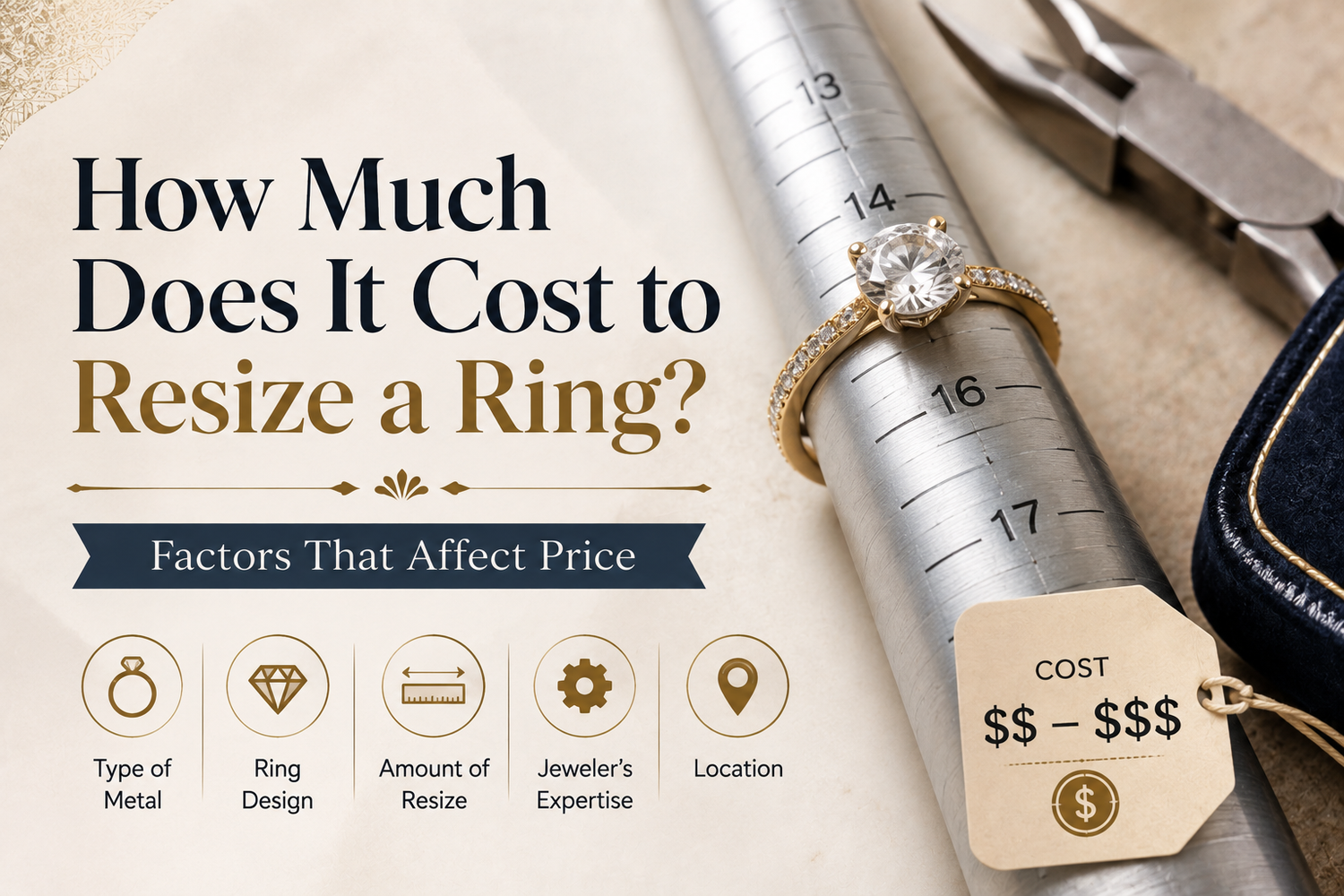
A complete breakdown of ring resizing costs, what drives the price up or down, and when resizing isn't the right option.
Perhaps your ring was an inheritance from your family, and it does not fit you; or maybe since getting engaged, you have put on some weight, or lost it, or have accidentally purchased the wrong-sized ring. Whatever the case may be, it is one of the most common types of jewelry service sought by many, yet also the hardest to figure out pricing-wise. You can pay anywhere between $20 up to several hundred dollars, depending on certain key factors.
This guide covers all aspects of what affects the cost of resizing a ring, what you can expect in terms of price, and when resizing becomes impossible.
Average Cost to Resize a Ring

Generally speaking, basic ring sizing services tend to cost somewhere in the range of $20-$60, especially when it comes to plain metal rings that need to be resized by either half a size or a whole size. Complex services can be priced at anywhere from $100-$300, and even higher.
Here is an approximate price guide by type of ring:
|
Ring Type |
Typical Resizing Cost |
|
Simple metal band (no stones) |
$20–$60 |
|
Solitaire engagement ring |
$50–$100 |
|
Eternity band or pavé ring |
$100–$250+ |
|
Ring with a halo setting |
$75–$200 |
|
Platinum ring |
$75–$150 |
|
Ring with engraving |
$50–$150 (plus engraving redo) |
These numbers vary significantly by jeweler, region, and the extent of the resizing needed, so it's always worth getting a direct quote before committing.
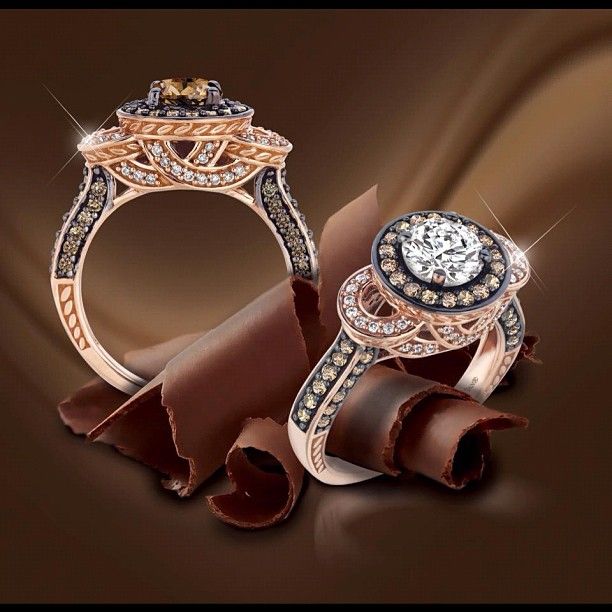
If you're looking for a stylish option, explore our collection of rose gold lab diamond rings, available in a range of elegant designs and settings.
The Main Factors That Affect Resizing Cost

1. The Metal Type
Different metals cannot be sized the same way. The choice of material is an important factor influencing not only the complexity but also the price of resizing a ring.
- Gold (10K, 14K, 18K): Quite an easy process that will cost you less compared to other materials. Higher the karat of gold, softer and easier it is to resize.
- Platinum: More costly option than gold, as platinum has high melting point which requires special equipment and skilled labor.
- Titanium and tungsten: Cannot be resized in a conventional way, as these metals are very durable and cannot be stretched or compressed like gold and platinum. Usually, there is no way out but to replace your ring.
- Silver: Cheap to resize although softer silver rings may be easily damaged in the process.
If you're purchasing a ring with future resizing in mind — for example, an engagement ring you plan to keep for decades — choosing a metal that resizes easily, like gold or platinum, can save money down the line compared to harder alternative metals.
2. How Much the Size Needs to Change
Minor changes are more affordable than major ones. Sizing up or down by half a size or even a whole size is normally cheaper, because only a little bit of metal needs to be taken out or put in. Larger sizes, which are two sizes or more, need more drastic alterations, especially when sizing up, as more metal needs to be added to the ring. The latter process, known as “shanking,” is generally more expensive than just expanding or shrinking the ring slightly.
As a rule of thumb: the bigger the size change, the more labor and material involved, and the higher the price.
3. Ring Design and Setting Complexity
The cheapest and simplest ring to adjust is a simple band with no adornments at all. The level of complication determines the price of adjustment if any of the following elements are included:
- Adjusting eternity bands, which are bands of stones that go all the way around the ring, is very complicated and expensive because the process will involve taking out and re-setting some stones around the area to be resized.
- Halo rings that have a ring of small stones around a center stone also demand careful handling to preserve the setting.
- Engraved rings might need to be engraved again after adjusting as the process may result in distorting or erasing the engraving.
- Fancy rings with filigree require an experienced jeweler who knows how to handle the style of the ring.
If you're shopping for a ring with resizing flexibility in mind, a solitaire or simple pavé design will generally be easier and cheaper to resize over time than a heavily detailed eternity or vintage-style setting.
4. Gemstones and Stone Placement
Gemstone rings, especially when the stones are very close to the ring band’s shank, make the job more difficult and expensive. In cases where stones are close to the spot where the resize will take place, the stones have to be taken out and then properly replaced, and this increases the cost and difficulty. This is important for:
- Channels of stones that run along the shank
- Pavé settings of stones near the sizing point
- Large stones that are also fragile (opals, emeralds, and other soft stones)
Diamonds are generally more resilient to the heat involved in resizing than softer gemstones, but any stone near the resizing point adds risk and, therefore, cost.
5. Whether the Ring Needs to Be Sized Up or Down
The procedure of ring resizing to a smaller size is normally less costly, as it normally only entails the removal of a small part of metal and rejoining of the metal ring band together again. The procedure of ring sizing to a bigger size is normally more costly as it entails the addition of metal of similar composition, color, and finish.
6. Jeweler Expertise and Location
Another factor affecting price is purely a matter of who will be doing the work and where it will be done. An individual independent jeweler might cost less than a national chain, but an individual jeweler who specializes in something or who possesses unique skills – such as experience working with platinum jewelry, antiques, or elaborate settings – might charge more for those skills.
When a Ring Can't Be Resized
However, not all rings are suitable for resizing even if you have unlimited funds at your disposal. The scenarios when resizing cannot be considered or is not recommended are:
- Rings made from tungsten, titanium or ceramic metals that do not stretch or compress under the influence of traditional jewelry tools
- Rings with bands of eternity setting, wherein there are no segments of bare metal that could be cut and resized
- Very old and delicate antique rings in which heating of the metal may damage the entire piece or cause the loss of gems
- Rings needing a greater size change than 2-3 sizes
In these cases, jewelers may recommend alternative solutions, such as sizing beads or inserts (temporary, non-permanent fixes), or in some cases, remaking the ring entirely using the original stones.
Alternatives to Traditional Resizing
If you find that your ring is not suitable for standard resizing, there are some other options available:
- Beads or Clips Resizing: Tiny metal beads inserted within the ring to decrease the interior circumference of the ring, which is used when resizing is required but the original structure of the ring is not modified.
- Silicone or Plastic Sizers: They are non-permanent and give a bulky look to the ring by making a loose ring tight-fitting. These are used on a temporary basis.
- Mounting the Stones in a New Ring: Sometimes rings are simply not resizable and thus the stones mounted on such rings can be remounted in another ring with the proper size. This procedure is expensive in comparison with resizing, but it is worth doing.
How to Get an Accurate Quote
As the cost associated with resizing varies a lot depending on the aforementioned considerations, the most appropriate course of action would be to take your ring to a professional jeweler and have it appraised on-site or to send them pictures and detailed information about the item if you plan to have the resizing done remotely.
If you're purchasing a new ring and want to avoid resizing costs altogether, working with a jeweler that offers custom design services allows you to have the ring made to your exact size from the start — often eliminating the need for future resizing entirely.
Final Thoughts
Resizing fees can be low as $50 or more than several hundred dollars depending on whether it is a basic resizing of a gold wedding band without any embellishments or an eternity ring which requires extensive effort to resize. Major factors affecting the resizing fee include the type of metal, the degree of resizing required, setting complexity and whether there are gemstones near the resize area. In some cases, rings made of exceptionally hard metals such as titanium cannot be resized at all using conventional techniques.
If you're unsure whether your ring can be resized, or what it might cost, the safest first step is always a direct consultation with a jeweler who can assess the piece in person. Many retailers, including those offering return and exchange policies on new purchases, also provide guidance on sizing before you buy — which can save you the cost of resizing altogether.


Leave a comment
This site is protected by hCaptcha and the hCaptcha Privacy Policy and Terms of Service apply.